




韩杰 等.《融合ChatGPT进行科学研究与写作:初学者指南》
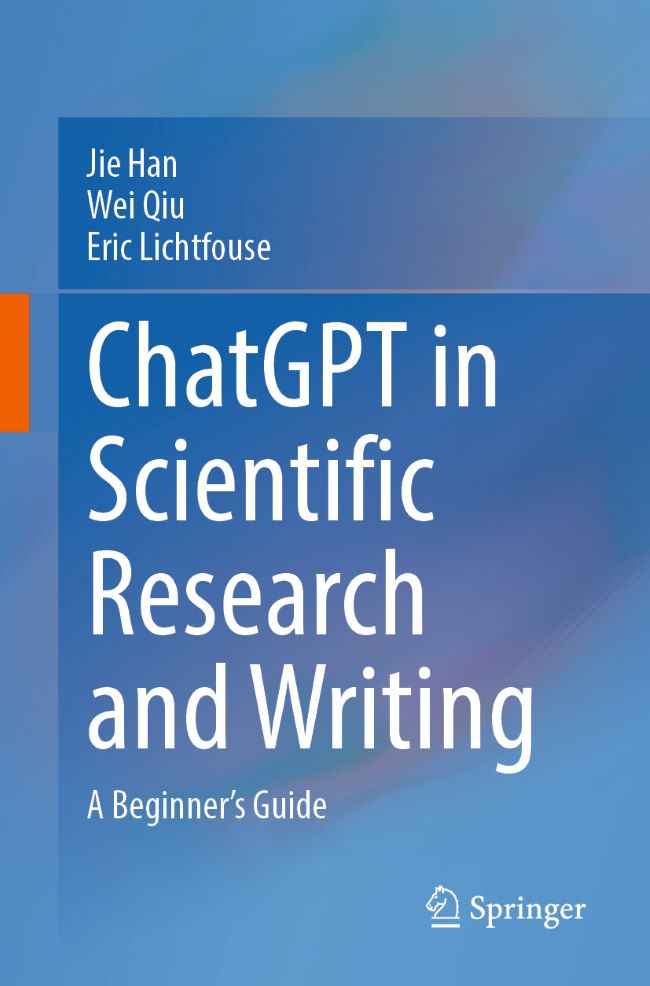
(New Book) ChatGPT in Scientific Research and Writing: A Beginner's Guide. Springer Nature Switzerland AG 2024. https://link.springer.com/book/10.1007/978-3-031-66940-8 (Published 14 September 2024)
作者注 | Authors' Note: Most scientists are constantly under pressure for reading essential literature, designing new experiments, writing successful proposals and papers, and meeting deadlines. However, imagine that your brain is connected to the entire human knowledge and can extract instantly essential information for discovery. Imagine that research tasks that took days to months can now be done within few seconds. This is not science fiction anymore since the onset of generative artificial intelligence tools such as ChatGPT. This book explains concisely and simply how to use ChatGPT for identifying new results, crafting titles, editing language, interpreting figures, creating visuals, and refining methods. ChatGPT even allows for brainstorming, designing experiments, writing proposals, responding to reviewers, and evaluating research papers. Written for researchers with no background in coding or prompt engineering, this book provides the skills necessary to navigate the changing landscape of scientific research. In particular, you will learn how to leverage ChatGPT’s unique capabilities to generate ideas, streamline literature reviews, and craft compelling narratives. In short, this book empowers you to unlock the potential of ChatGPT, boosting productivity, and take your scientific research and writing to new heights.
韩杰 等. AI如何评价我的论文?

(图片由DALL E2模型生成)
(Preprint version) What does AI think of my paper? Available at SSRN. http://dx.doi.org/10.2139/ssrn.4525950 (Date Written: 26 May 2023) PDF download
作者注 | Authors' Note: The time has come to test ChatGPT, the new AI application that everyone has been talking about, for something more than recreative fun. Over the past few weeks, it consistently impressed me over numerous random tasks that I demanded, some of which are downright unthinkable for humans, e.g., analyze a 7,000-word research paper in 30 seconds and list the findings and methods in bullet points. It is not flawless, but it is indeed powerful.
Eric Lichtfouse博士 等. 科研人员的“外脑”:科研评价与论文写作
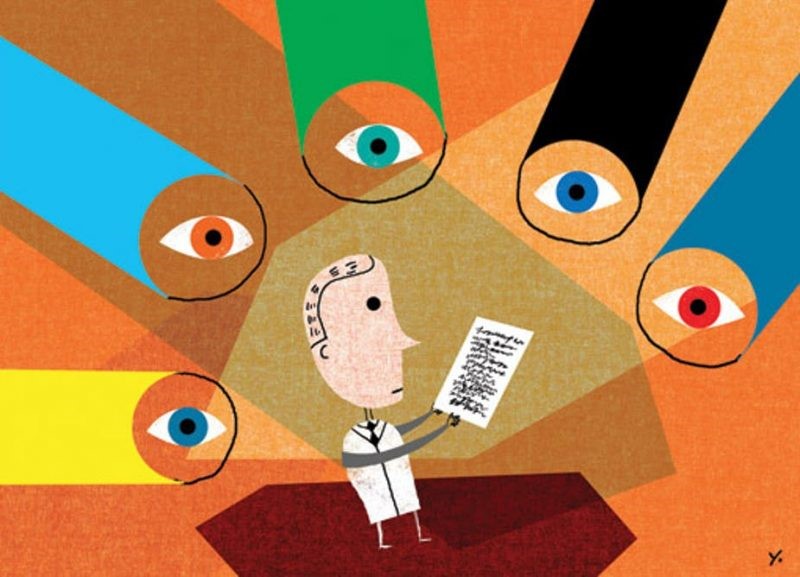
(图片来自: AJ Cann/Flickr)
Exobrains for research evaluation and paper writing. Environmental Chemistry Letters. https://doi.org/10.1007/s10311-023-01672-5 (Date Written 30 July 2023, Published 10 December 2023)
韩杰 等. 大数据揭示环境领域新的研究前沿和当下热点
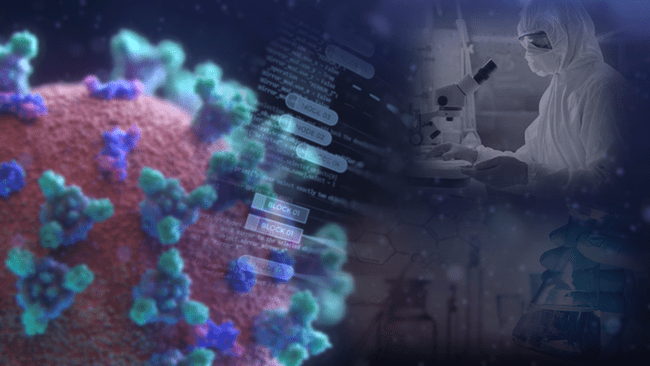
(Preprint version) COVID-19 big data highlight new environmental research frontiers and current spotlights. Available at SSRN. http://ssrn.com/abstract=4033554 (Date Written: 13 February 2022) PDF download
作者注 | Authors' Note: In the past two years, environmental scientists around the world have put tremendous efforts into understanding the environmental persistence and transmission of the severe acute respiratory syndrome coronavirus 2 (SARS-CoV-2), the infectious agent of COVID-19, and the reverse impact on the natural and living environments by the global pandemic. Many innovative, forward-thinking thoughts and methods have been put forward by environmental scientists. There are now more than 10,000 articles related to COVID-19 published in scholarly journals in environmental research disciplines, representing about 5% of scientific publications on COVID-19 from all research disciplines and showcasing the tireless efforts and swift actions taken by environmental researchers around the globe. This vast and growing body of scientific literature provides invaluable references for decision-makers, yet it also presents a daunting task for one to acquire the essential knowledge for decision-making or to find major gaps for prioritizing future research efforts. Data science offers efficient tools for scientists and policy-makers to cope with the need to harness the wealth of information from what is becoming the largest collection of scientific publications on a human pandemic in history.