




"At the start of every disaster movie is a scientist being ignored."
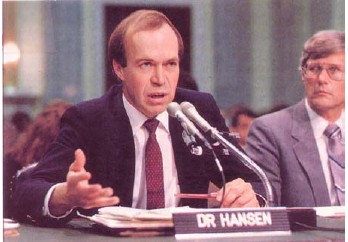
In 1988, Dr. James Hansen testified before the U.S. Congress about his research and evidence on global warming. His warning — and those by his peers — were largely ignored then by policy makers.
Eighteen years later, Davis Guggenheim directed a documentary film, "An Inconvenient Truth", featuring a slideshow presented by former U.S. Vice President Al Gore in his campaign to raise public awareness on global warming. Leavaraged from the influence of American popular culture, the film media, and Gore's own publicity and influence as a former U.S. presidential candidate, the documentary raised international awareness on global warming and more generally, on climate change. The documentary won two Academy Awards and became the 11th highest grossing documentary in the United States. Gore received the Nobel Peace Prize in 2007.

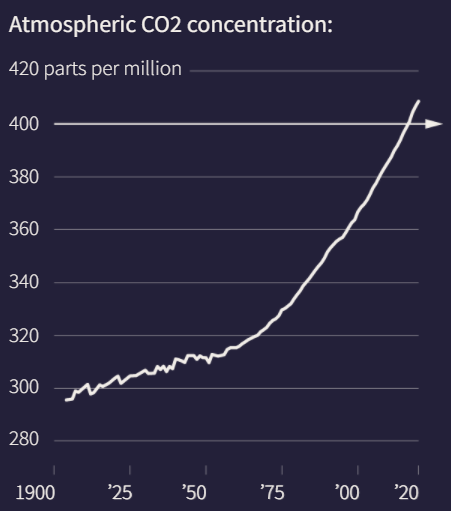
Now we know global warming is a matter of fact, not something for political debate. The atmospheric CO2 concentration surpassed 400 parts per million in 2020. The last time carbon dioxide reached this level on earth was about 4,000,000 years ago, when the planet was about 3 deg C warmer and oceans were at least 10 meters higher than the present day (source: NOAA and Reuters).
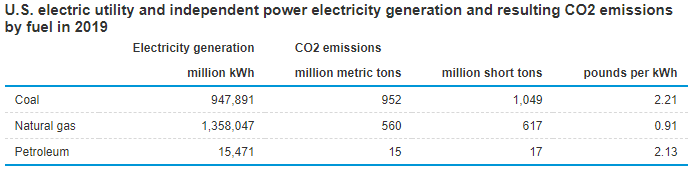
In 2019, power plants that burned coal, natural gas, and petroleum fuels were the source of about 62% of total electricity generation in the U.S., but they accounted for 99% of U.S. electricity-related CO2 emissions. The other 1% of CO2 emissions were from other fuels and gases derived from fossil fuels and some types of geothermal power plants (source: eia.gov). Data are lacking in many other countries but they are expected to show a similar trend.
This is a man-made crisis. And it is up to the humankind to rectify it. We need committments, actions, technologies, and research to tackle this grand challenge. Scientists have an essential role to take in this imperative. Their work and voices, should no longer be ignored.