





(二)基于核自旋补偿的运动脑磁测量:
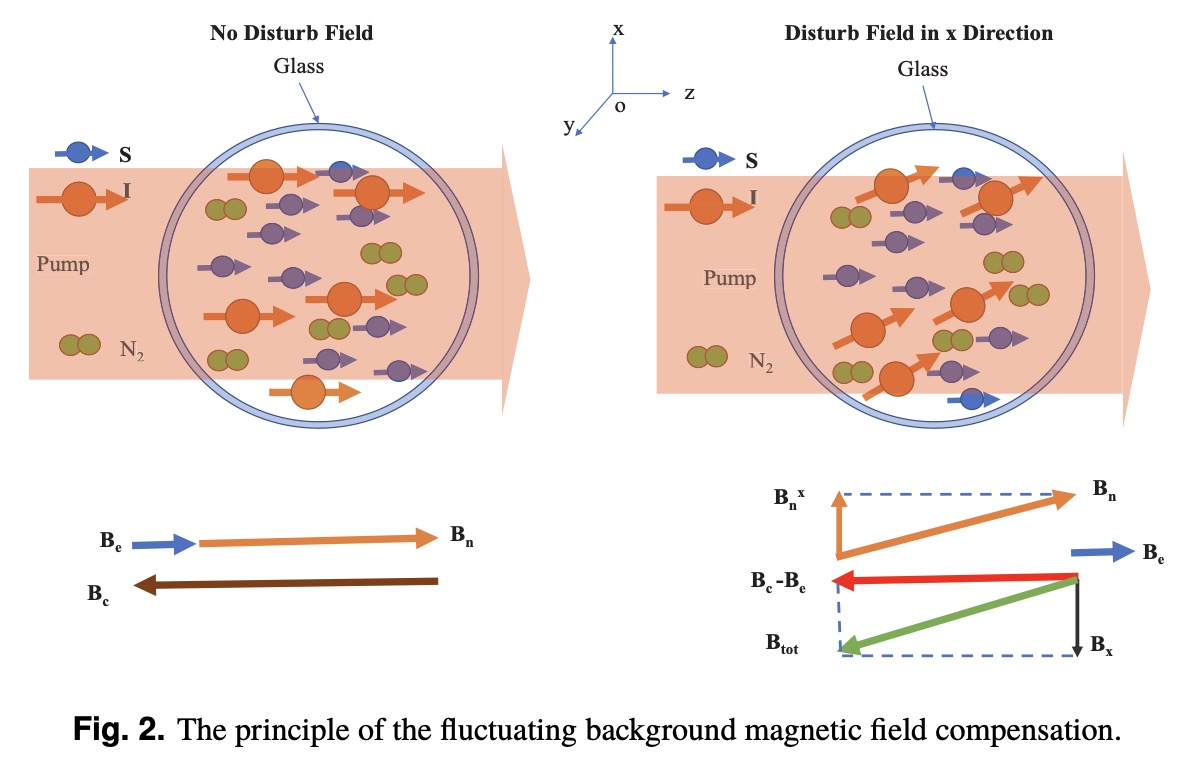
在人体运动状态下进行脑磁测量具有很大的挑战,核心在于如何对由于运动造成的背景干扰磁场进行抑制;脑磁信号的强度一般在100fT量级,磁屏蔽房内部的剩磁通过补偿可以到1nT以内,虽然已经对磁场进行了较好的抑制,但是运动造成的磁场仍然较大。为此,开发一种基于核自旋的干扰磁场子补偿技术。如下图所示,利用超极化的核自旋可以实现运动状态下背景干扰磁场的补偿。
Background magnetic field noise compensation based on hyper-polarized nuclear spins for moving MEGs recording.
Measuring brain magnetism during human motion poses significant challenges, mainly in suppressing background interference magnetic fields caused by movement. The strength of brain magnetic signals is generally on the order of 100 femtoteslas (fT), and although magnetic shielding rooms can reduce residual magnetism to within 1 nanotesla (nT), the magnetic fields caused by motion remain substantial. Therefore, a compensation technique based on nuclear spin interference is developed. As illustrated in the figure below, compensating for background interference magnetic fields during motion is achieved using hyperpolarized nuclear spins.
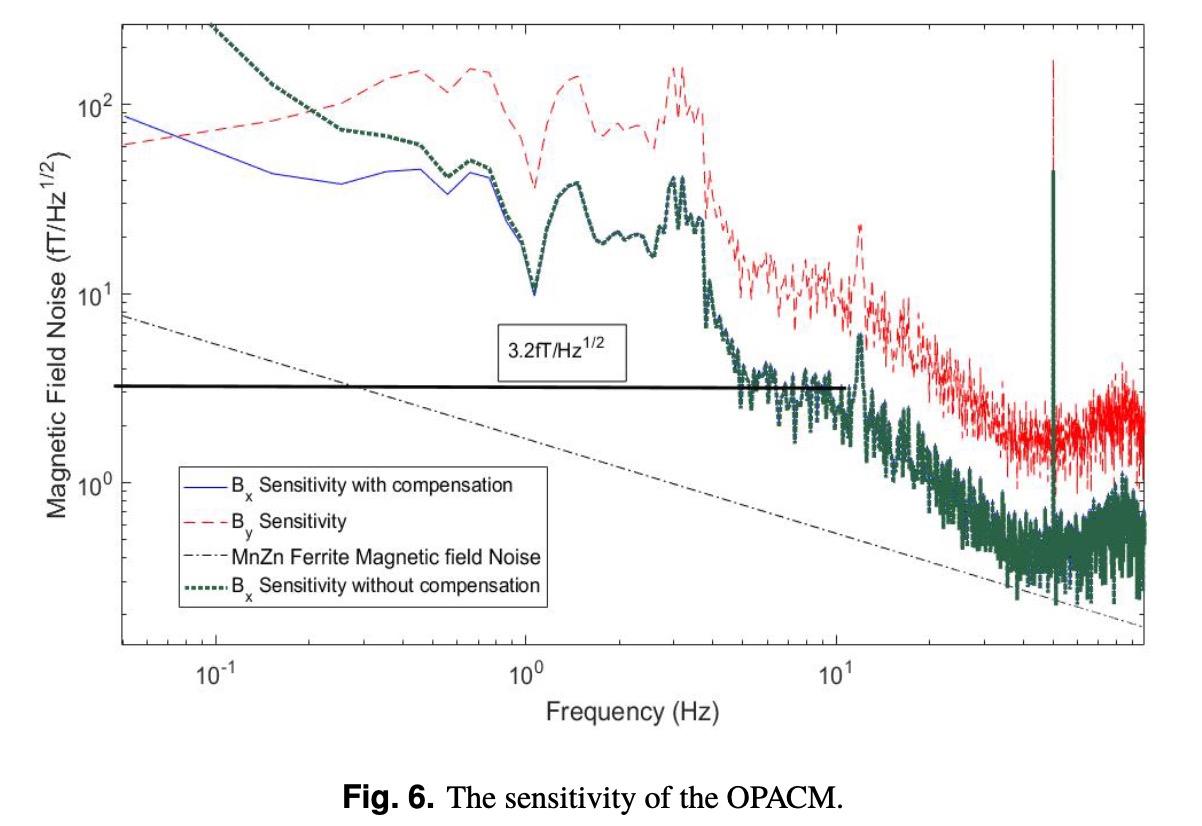
利用此磁强计,实现了灵敏度为3.2fT/Hz^(1/2) 的灵敏度。3.2fT/Hz^(1/2) magnetic field sensitivity has been achieved.
下一步拟通过3He进行核自旋自补偿研究,研制小型化的原子磁强计探头,对运动脑磁进行测量。Next step, hyper-polarized 3He unclear spins will be used for the compensation. Compact sensor head design will be achieved.
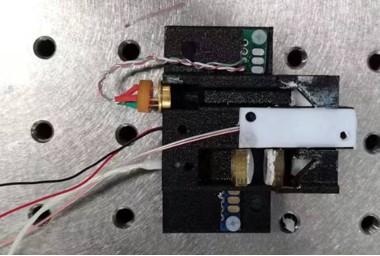
基于He3的小型化原子磁强计探头
本课题组还研制了原子磁强计所需的各项关键核心技术,比如碱金属气室,无磁加热芯片等:
Some key components have been developed by MEMS technology such as alkali vapor cell, non-magnetic heating chips:
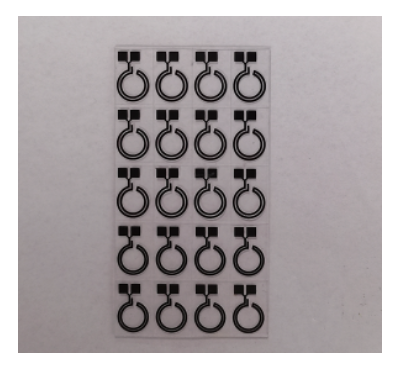
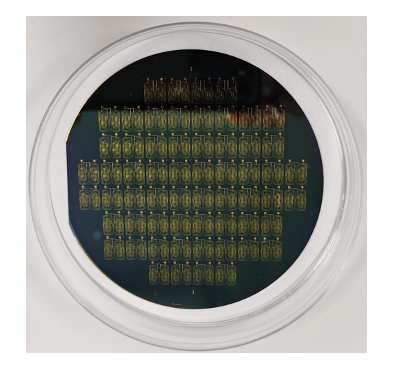
无磁加热芯片(non-magnetic heating) 双平面调制线圈(bi-planar coil)
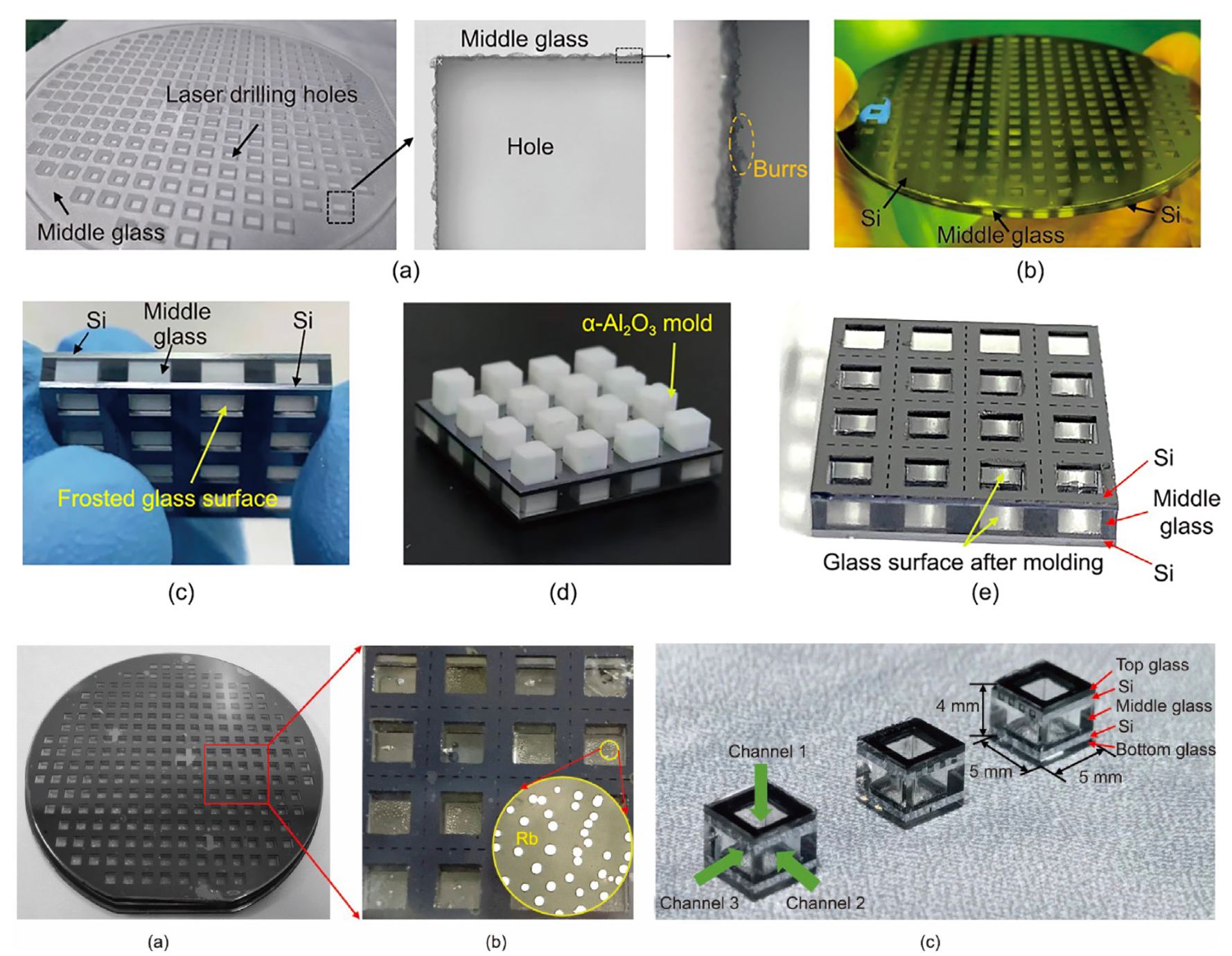
MEMS碱金属气室(MEMS vapor cell)
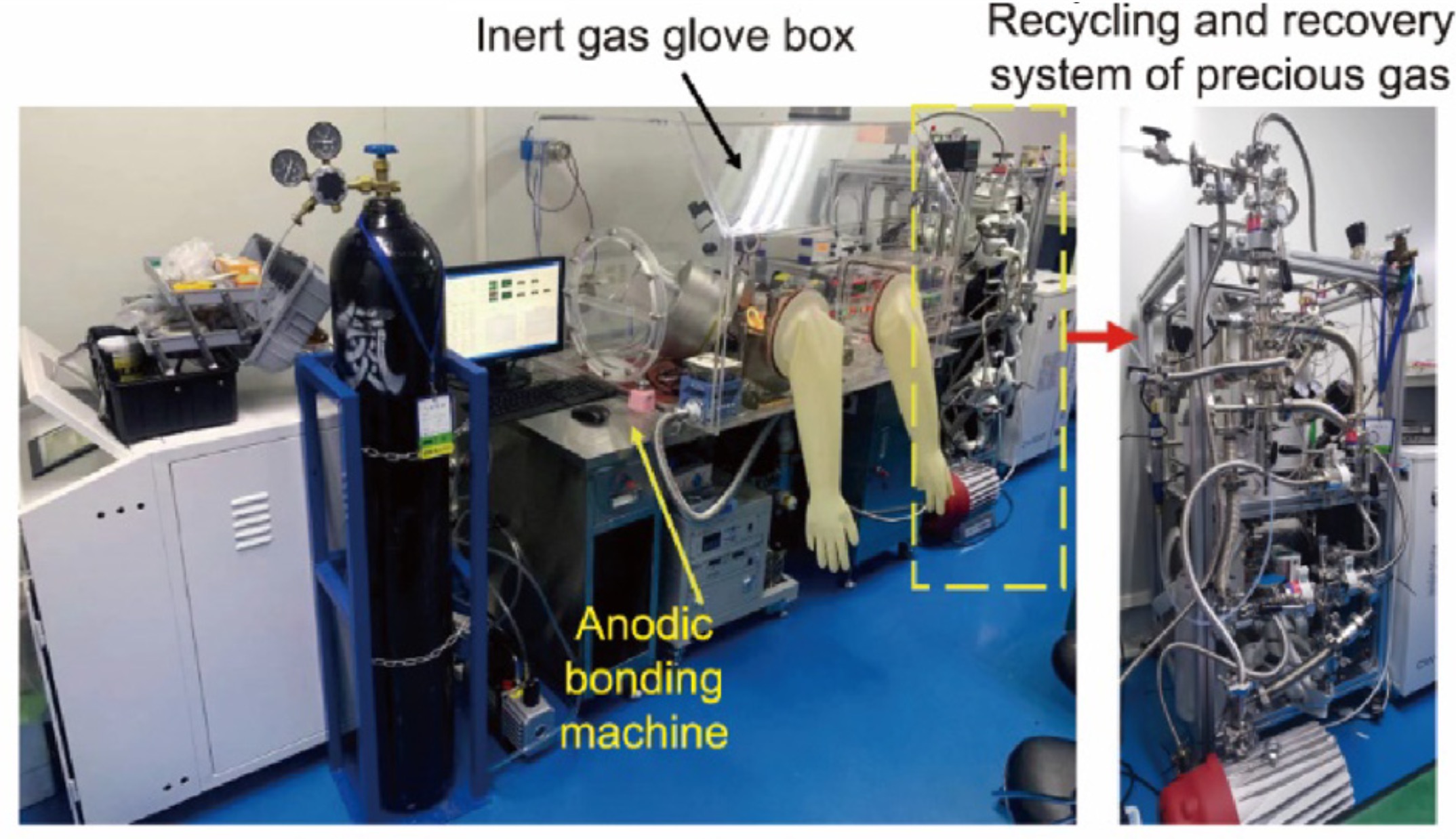
MEMS碱金属气室制作供气装置(MEMS vapor cell fabrication platform for gas handling.)