
An open-source dynamic vision dataset for non-contact vibration measurement and fault diagnosis of mechanical systems.
| Sub-dataset | System | Purpose |
|---|---|---|
| XJTU-DV-Rotor | Rotor test bench | Fault diagnosis |
| XJTU-DV-Pump | Pump test bench | Fault diagnosis |
| XJTU-DV-Beam | Structural beam | Vibration measurement |
Dataset details below: Downloads · Citation · Overview · XJTU-DV-Rotor · XJTU-DV-Pump · XJTU-DV-Beam
Google Drive | Baidu Netdisk(Code: 6vkd) | Tencent Weiyun
If XJTU-DV data are used in your research, please cite the following reference:
Xiang Li, Shupeng Yu, Yaguo Lei, Naipeng Li, Bin Yang*, "Dynamic Vision-Based Machinery Fault Diagnosis With Cross-Modality Feature Alignment", IEEE/CAA Journal of Automatica Sinica, 2024, 11(10), 2068–2081.
If you have any questions regarding the dataset, please contact Xiang Li by email: lixiang@xjtu.edu.cn
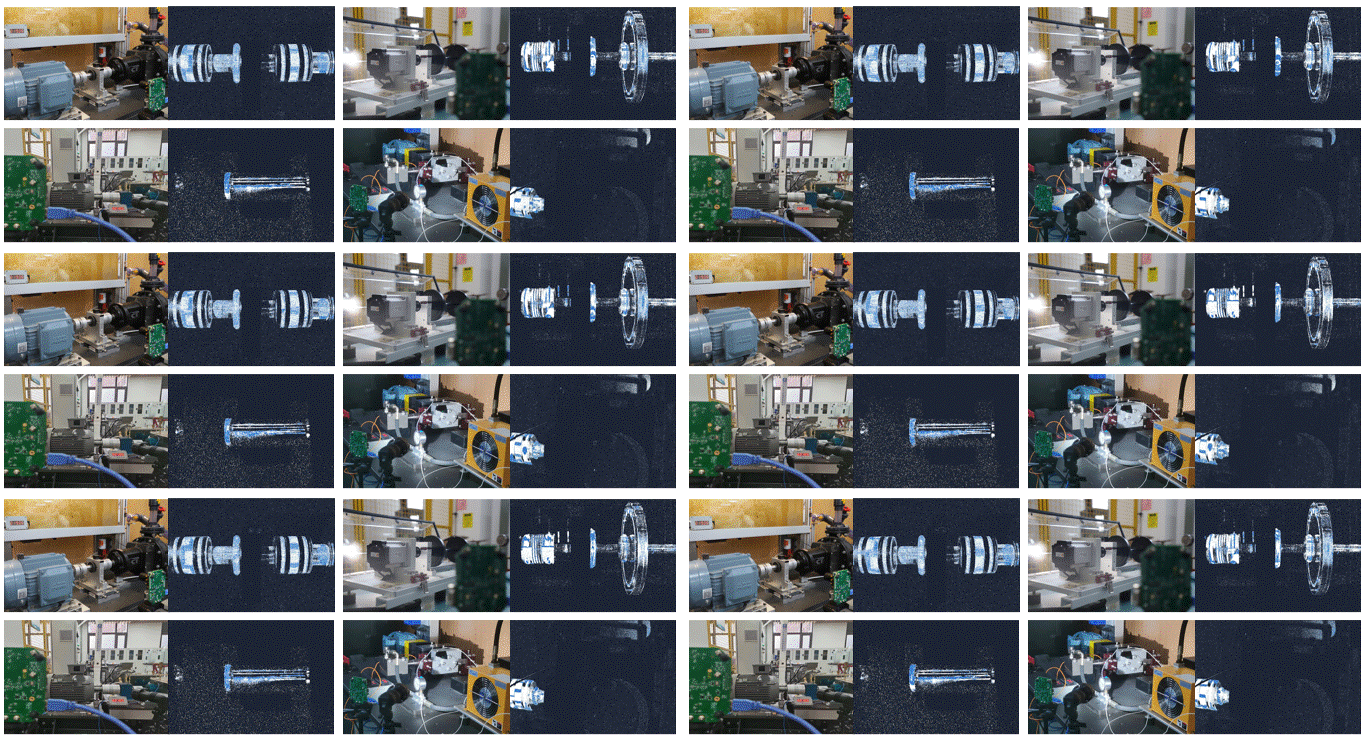
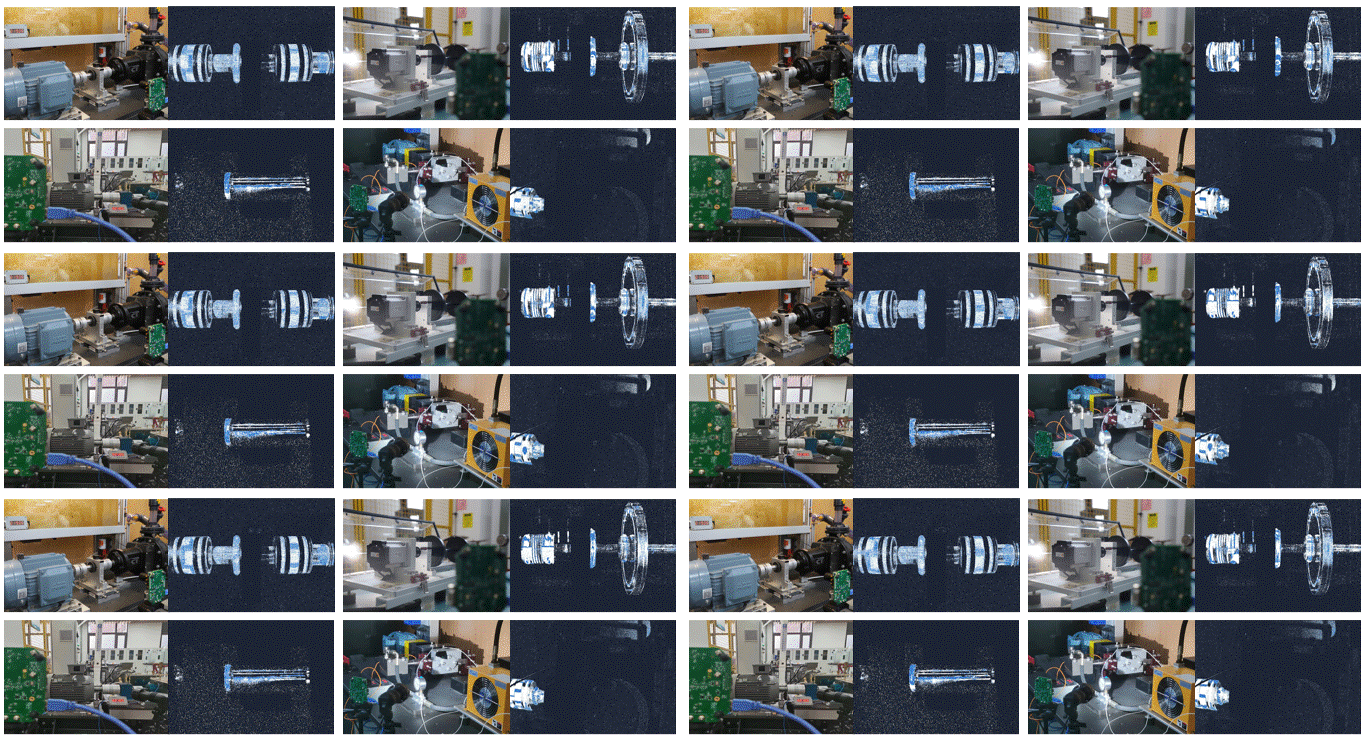
Non-contact vibration measurement is of great importance for fault diagnosis and prognosis of mechanical systems in many industrial scenarios. Dynamic vision is an emerging vision technology for vibration sensing.
We introduce XJTU-DV, an open-source dynamic vision dataset for non-contact vibration measurement and fault diagnosis.
The XJTU-DV-Rotor and XJTU-DV-Pump sub-datasets include the dynamic vision data from a rotor and a pump test bench, respectively. The dynamic vision data are collected under different fault and operating conditions.
The XJTU-DV-Beam sub-dataset includes the dynamic vision data on a structural beam system, as well as the corresponding laser vibrometer data as ground truths.
We hope it could benefit researchers for further development of such new technologies!
For more detailed dataset information, please refer to:
Xiang Li, Shupeng Yu, Xinrui Chen, Yaguo Lei, Bin Yang*, Naipeng Li, XJTU-DV: Open-Source Dynamic Vision Dataset for Non-Contact Vibration Measurement and Fault Diagnosis of Mechanical Systems, Chinese Journal of Mechanical Engineering, 2026
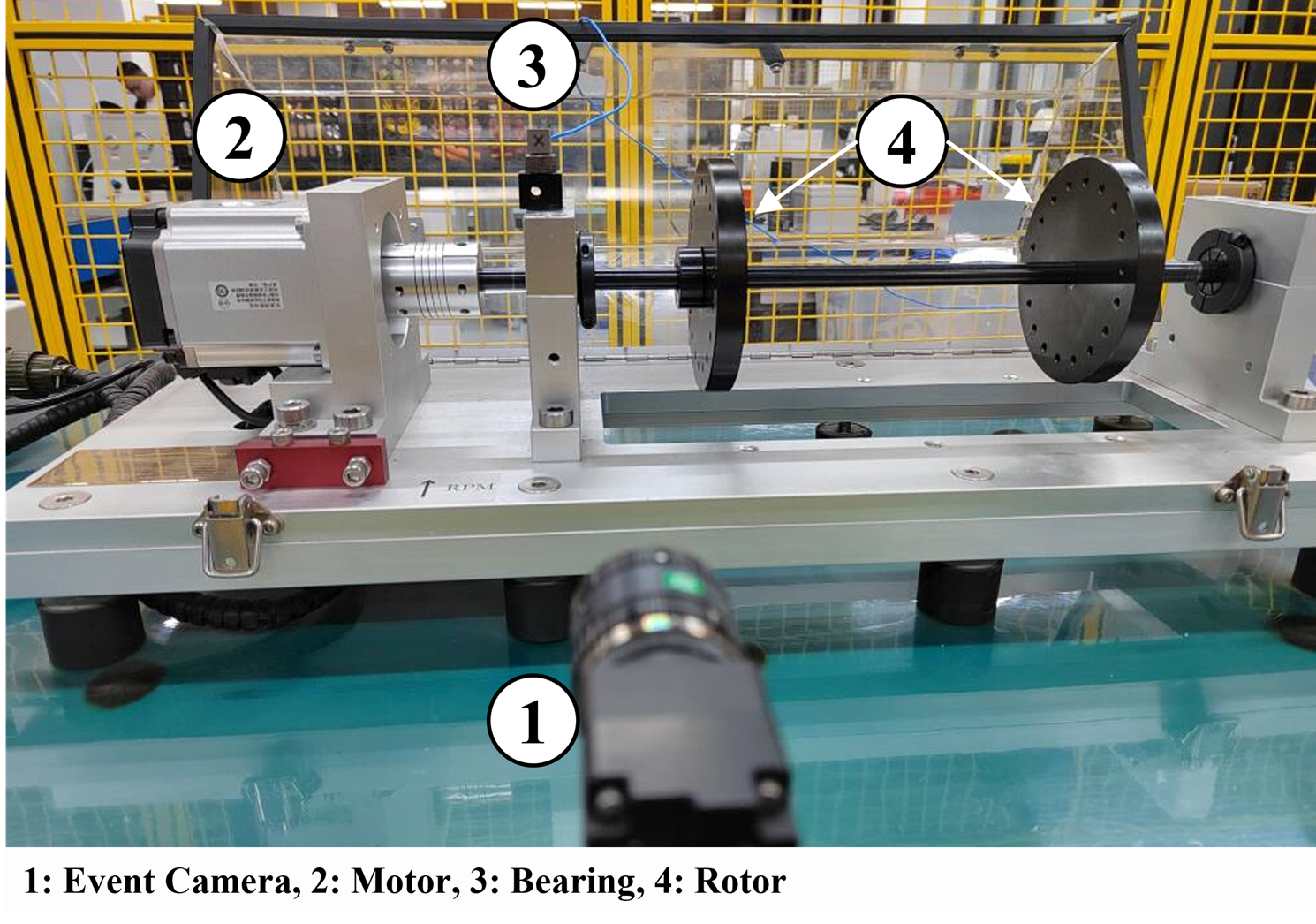
The XJTU-DV-Rotor dataset was collected from the rotor dynamics simulation test rig. The experimental platform mainly consists of a programmable three-phase motor, a coupling, two rotors, and two rolling bearings.
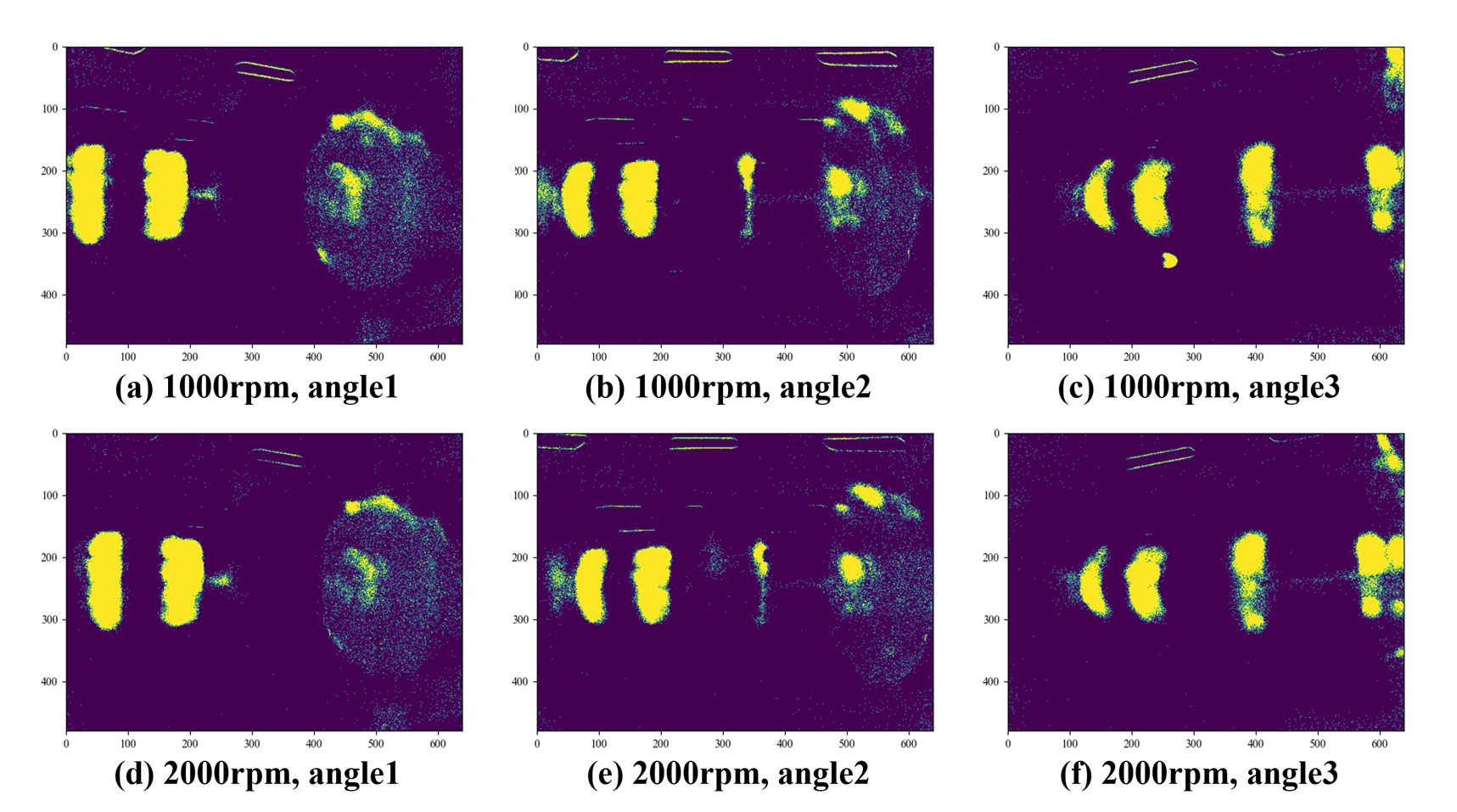
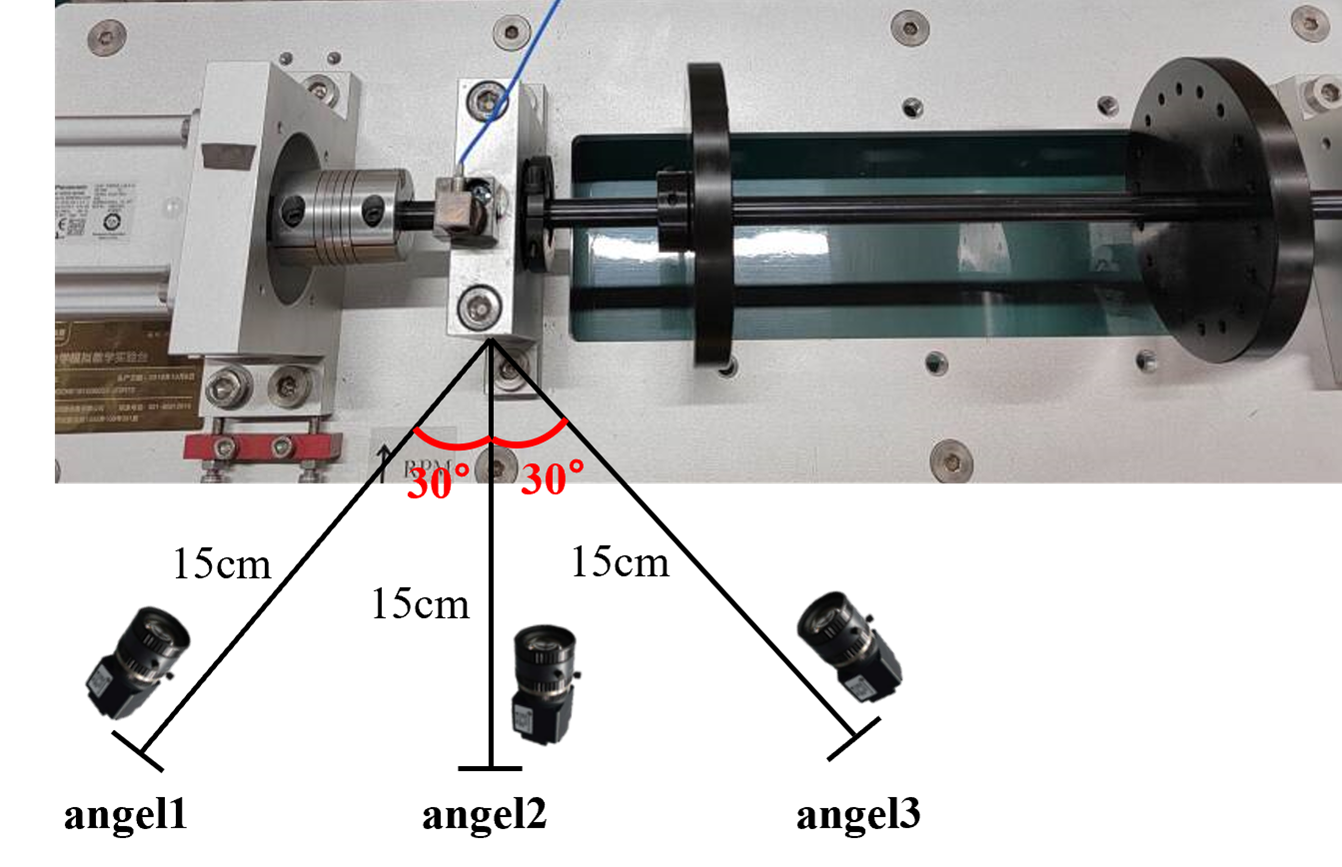
During the experiments, the event camera was positioned facing the housing of the rolling bearing. As the shaft rotates, the bearings support the system and transmit dynamic responses, while the event camera continuously records high-temporal-resolution visual data of the bearing housing. The dataset comprises multiple experimental recordings conducted under varying operating conditions, including different shooting angles and rotational speeds.
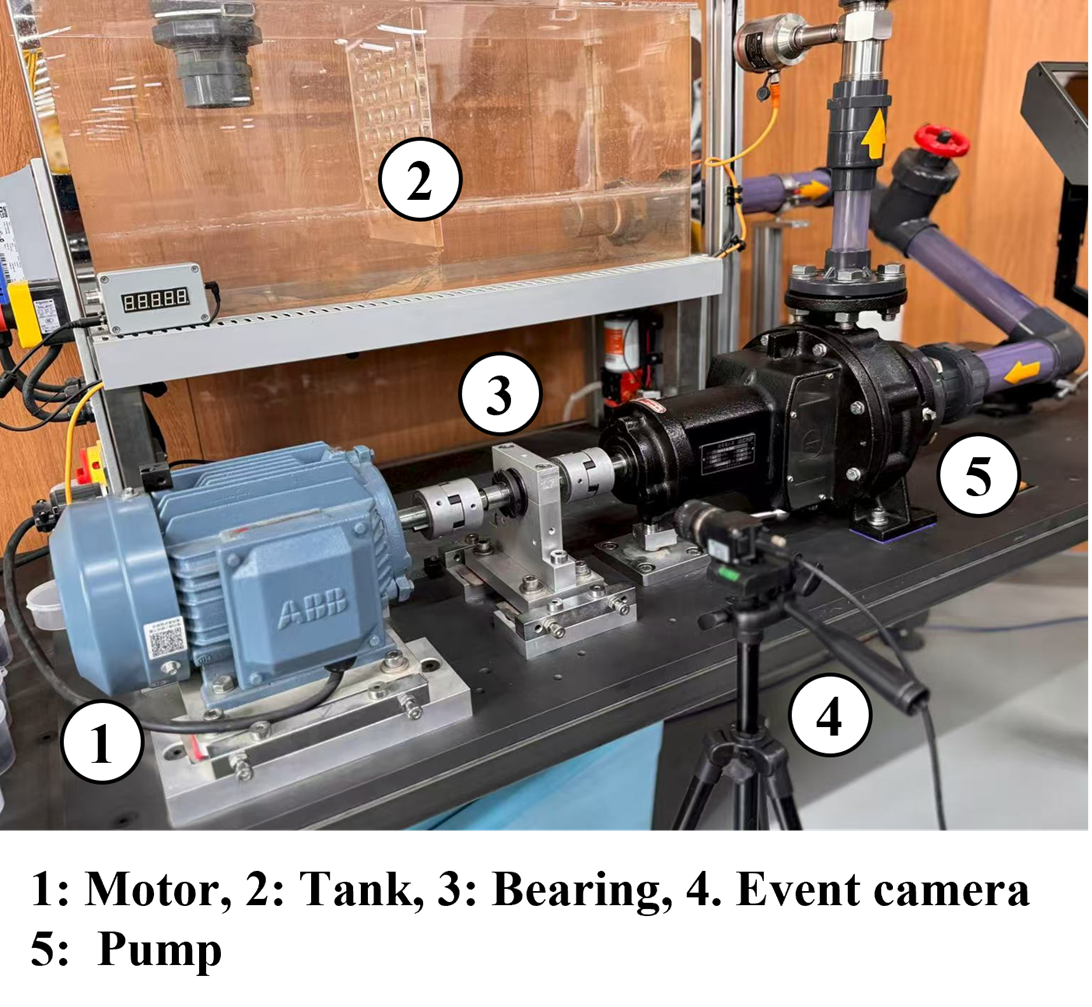
The XJTU-DV-Pump dataset was collected from a nuclear power cooling circulation pump test rig. The test platform is designed to replicate the operating environment of a typical cooling circulation system and mainly consists of a three-phase asynchronous motor, a centrifugal pump, a water tank, a closed-loop pipeline with valves, and a control system.
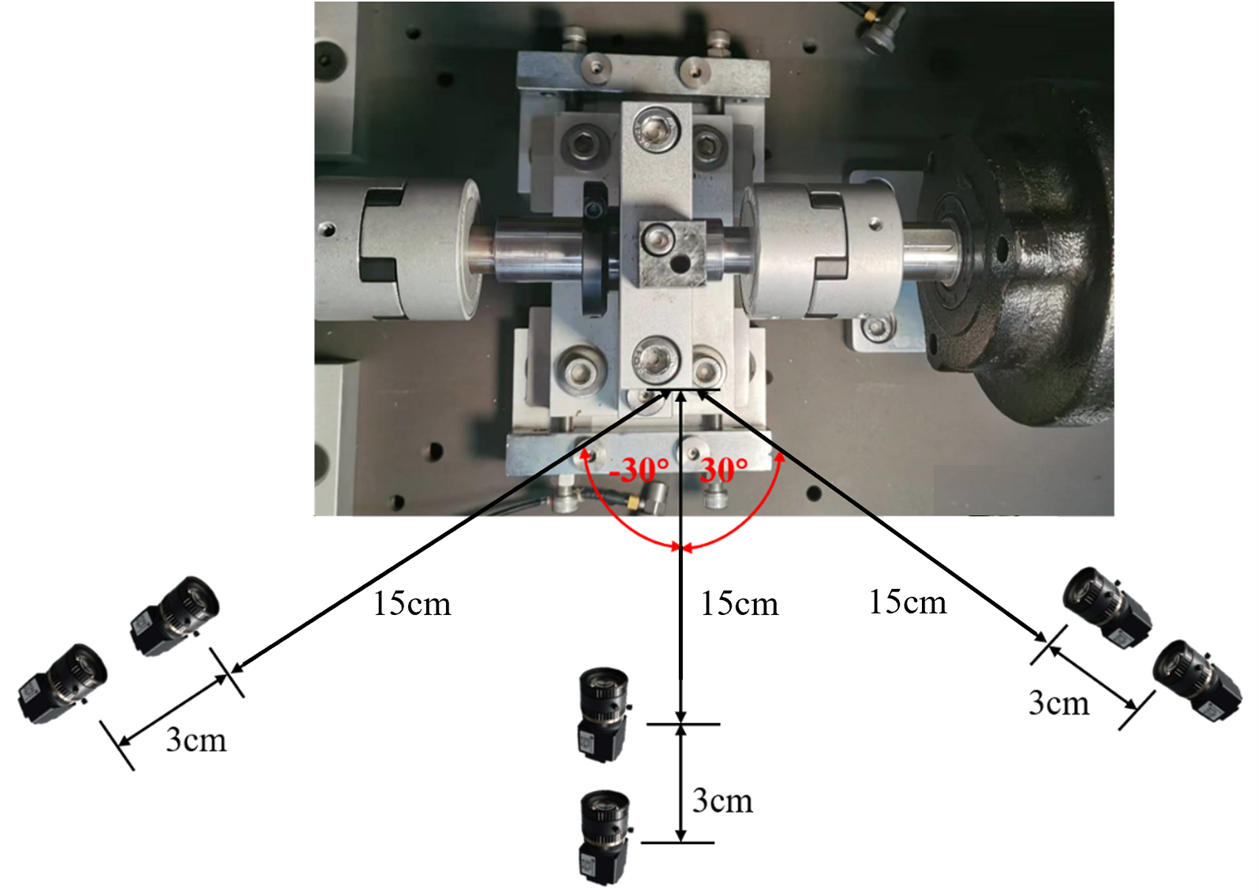
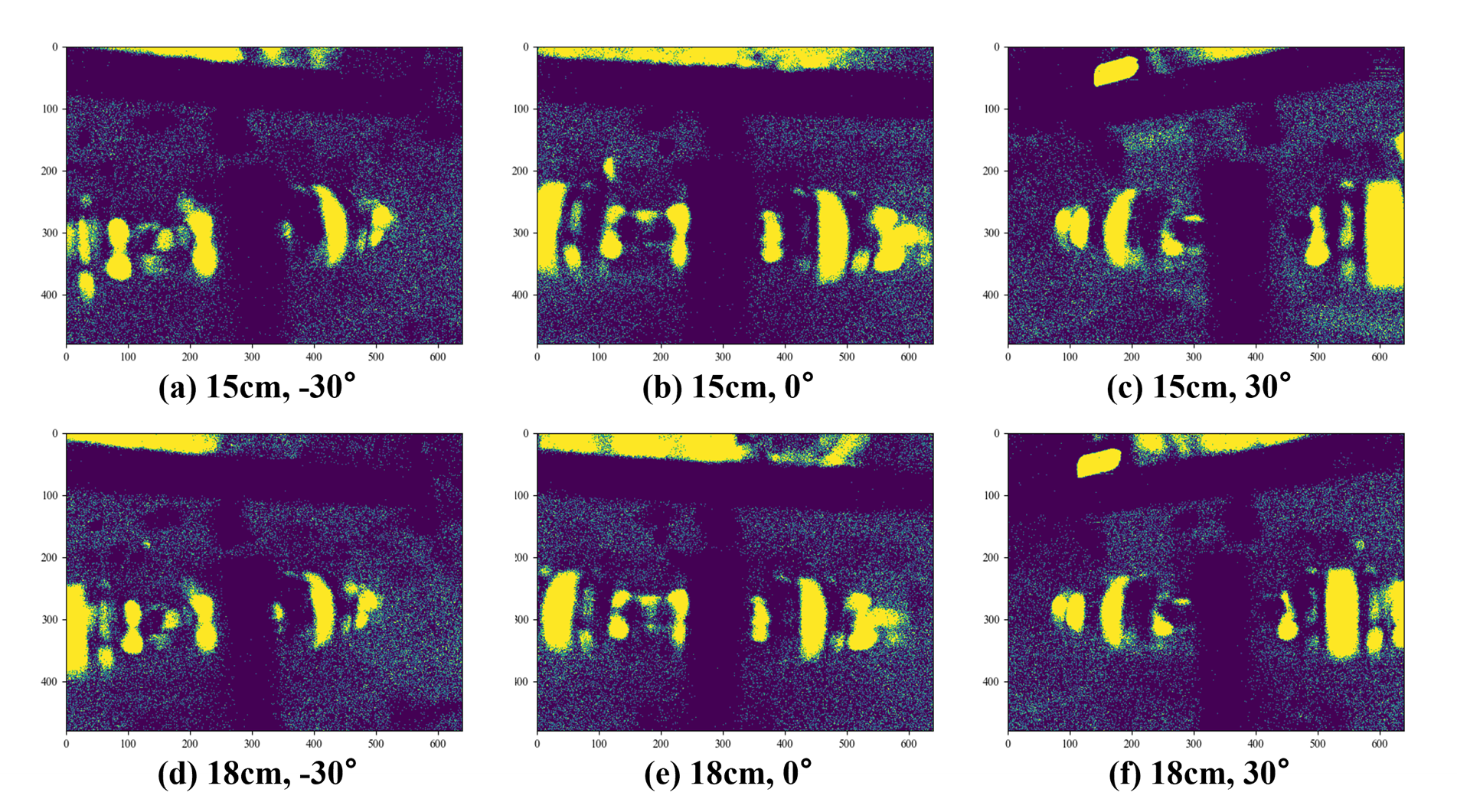
An event camera was positioned facing the central support bearing to continuously record high-temporal-resolution dynamic vision data. The dataset comprises recordings from 6 health states under 6 distinct operating conditions, incorporating variations in capture distance and camera placement angle. Three different rotational speeds are also included. To facilitate data interpretation and analysis, auxiliary information is provided together with example codes that demonstrate how to access the dynamic vision data and perform basic visualization.
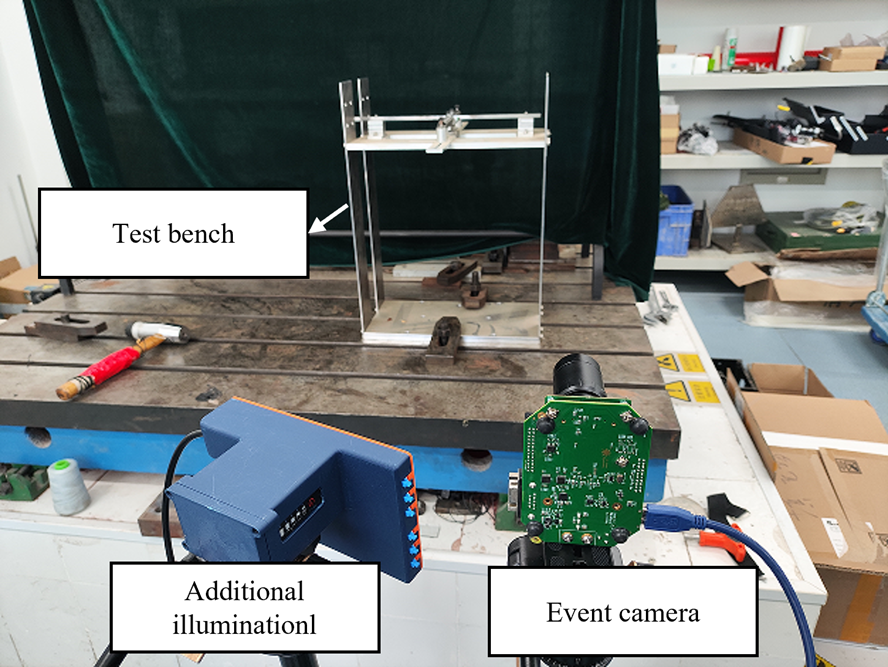
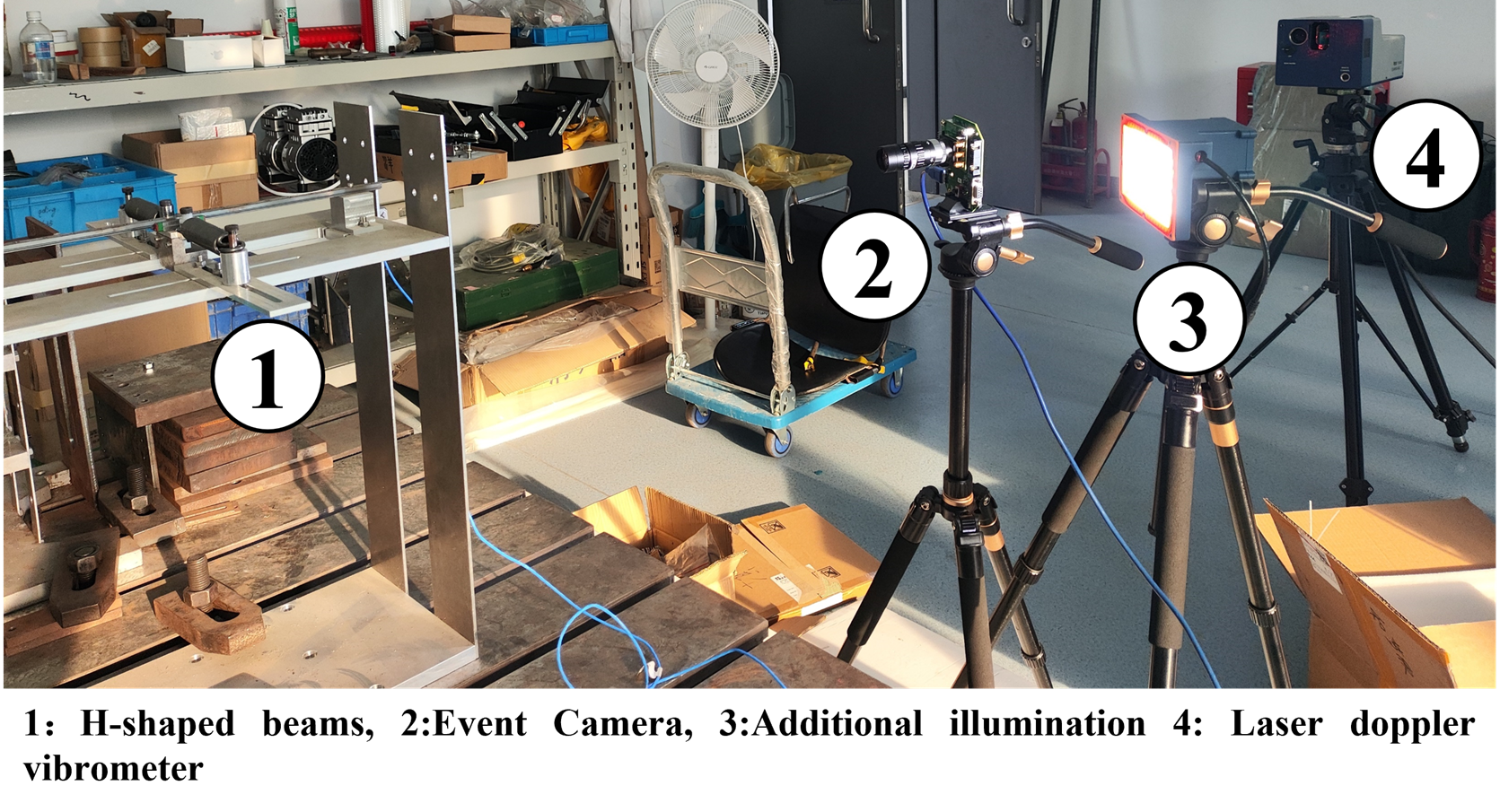
The XJTU-DV-Beam dataset was collected from the structural vibration test rig. The experimental setup primarily consists of an H-shaped beam vibration test rig, an event camera, additional illumination, and a laser Doppler vibrometer (LDV).
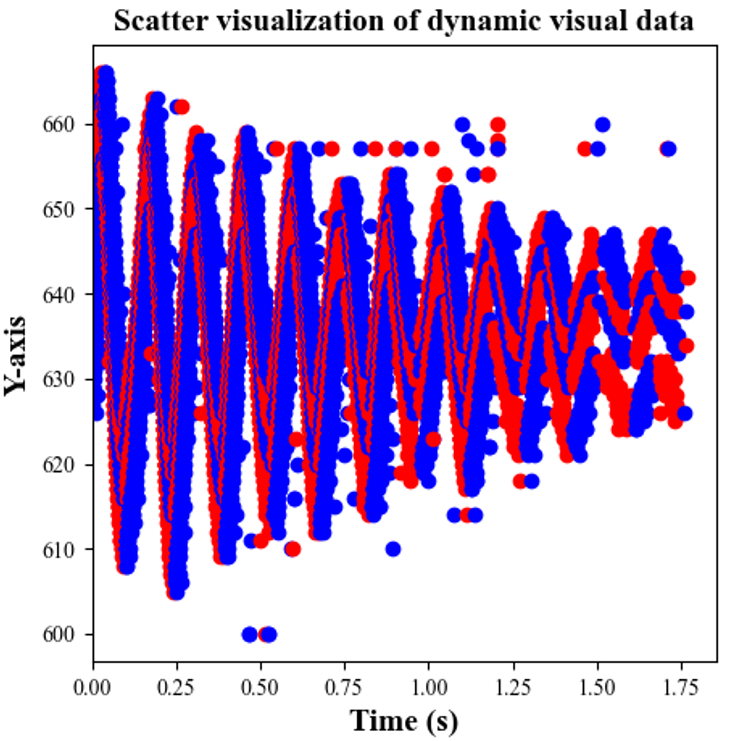
The H-beam is initially externally excited by a hammer. Subsequently, the entire structure begins to vibrate, and due to damping effects, the vibration amplitude gradually decays over time. During this process, the event camera continuously captures high-temporal-resolution visual data, recording the beam’s motion dynamics from the moment of impact until the vibrations diminish.