



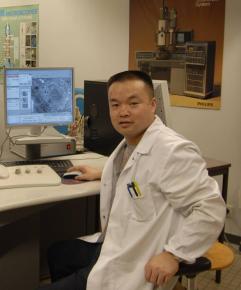
I first became captivated by the complexities of cancer and immunology during my undergraduate degree at Shaanxi Normal Univeirsity, which led me to a PhD in Prof Zhinan Chen’s lab at the Fourth Military Medical University (Xi’an China) investigating roles of CD147 in T cell biology, and roles of the ER stress signaling pathways in protecting multiple myeloma (MM) cells from proteasome inhibitors-induced death in Prof. Karin Vanderkerken's lab at Virje Universiteit Brussel(Free University of Brussels, Brussels, Belgium). I retained a keen interest in NK (Natural killer) cell-based immunotherapy for MM during my postdoctoral research in Prof. Michale O’Dwuer's lab at the University of NUIG in Ireland, by collaborating with a startup biotechnology company ONK Therapeutics. It was during this time in we developed novel NK cell immunotherpy options for blood cancers. This research led to one of the first PCT patent to improve NK cell ability to kill cancer cells.
Since 2014, I have secured two National Natural Science Foundation of China Awards to study drug resistance mechanisms of MM cells, and the bone protection/formation roles of proteasome inhibitors in MM. And, secured one international grant supported by ONK Therapeutics to study the effects of tumor microenvironment factors on NK cells. During COVID-19 pandemic, I also COVID-19 committed to the studies of the immunopathology of SARS-CoV 2, with support of XJTU-QINLONG grant.
My research topics are at the forefront of MM, NK cells fileds, and have published high impact studies. We were the first to characterize bone marrow tumor hypoxia can be target for MM therapy (Blood, 2010, 2012; Molecular Cancer Therapy, 2014). Our research has also made key contributions for understanding the drug resistance mechanisms of MM cells to proteasome inhibitors, and the mechanisms of proteasome inhibitor-induced osteogenesis (Blood,2012; Stem Cell & Therapy, 2020). Focusing on the effects of tumor hypoxia, we dissected the cells signaling changes that impairing NK cytotoxicity (Journal of Immunology Research, 2020). In 2021, we published two highlighted articles in Journal of Leukocyte Biology, discovered that hyperactivated peripheral blood monocytes is the key determinant of the severity of COVID-19.