

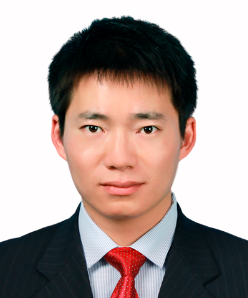
Liwei CHEN
- Professor
- Name (English):Liwei CHEN
- E-Mail:
- Date of Employment:2026-03-11
- Administrative Position:Professor
- Education Level:With Certificate of Graduation for Doctorate Study
- Business Address:Room 542, Block A, South No.1 Bldg, Qujiang Campus, Xi’an Jiaotong University
- Contact Information:
- Degree:Doctor
- Professional Title:Professor
- Status:Employed
- Alma Mater:Tohoku University
- College:School Of Mechanical Engineering
- Discipline:Mechanical Engineering
 Other Contact Information
- Email:
- PostalAddress:
- ZipCode:
- Research Field
1) Laser Micro/Nano Precision Machining and Applications
Focusing on the critical demands for high precision, minimal damage, and cross-scale manufacturing in high-end manufacturing sectors, this research area investigates laser micro/nano machining technologies. It systematically explores processing methods such as femtosecond/picosecond laser surface structuring, micro-drilling, precision cutting, and selective etching, aiming to elucidate the intrinsic correlations between process parameters and machining quality (precision, roughness, heat-affected zone, recast layer). Customizable laser micro/nano processing solutions are developed for key application scenarios, including critical aerospace components (e.g., turbine film cooling holes, ceramic matrix composite machining), precision optical elements (e.g., diffractive optical elements, microlens arrays), and biomedical devices (e.g., vascular stents, drug release structures).
2) Synchrotron Radiation X-ray Imaging and Dynamic Characterization
Leveraging large-scale synchrotron radiation facilities such as Spring-8, this research direction develops high spatiotemporal resolution X-ray imaging and characterization methods for laser processing, exploiting the unique advantages of high brightness, high coherence, and energy tunability. A primary focus is time-resolved X-ray phase-contrast imaging to enable in-situ dynamic observation of laser-induced melt pool flow, pore nucleation and growth, shockwave propagation, and phase front movement. Complementary techniques, including X-ray diffraction, small-angle X-ray scattering, and fluorescence analysis, are employed to characterize crystal structure evolution, elemental distribution, and residual stress evolution during processing. By deeply integrating synchrotron experiments with multi-physics modeling, this approach reveals the fundamental physical mechanisms underlying laser processing, providing critical experimental data for process optimization and material design.
3) Laser Additive Manufacturing and In-Situ Monitoring Technologies
Addressing core challenges in additive manufacturing processes such as laser powder bed fusion and directed energy deposition—including complex thermal histories, susceptibility to defects, and difficulties in quality control—this research focuses on melt pool dynamics, solidification behavior, microstructural evolution, and the formation mechanisms of defects (pores, lack of fusion, cracks). High-speed in-situ observation methods based on synchrotron X-ray imaging are developed to dynamically track melt pool flow, spatter behavior, and internal defect evolution. By integrating multi-modal sensing techniques such as high-speed optical imaging, infrared thermography, and optical spectroscopy, correlation models between process signatures and resulting part quality are established. Data-driven defect detection and closed-loop quality control methods are developed to enhance the stability and repeatability of additive manufacturing processes.
4) Multi-Physics Field Coupling and Extreme Condition Manufacturing
Aiming at the complex multi-field coupling characteristics in laser processing—involving thermal, mechanical, optical, plasma, and fluid fields—this research direction combines theoretical and experimental approaches. Multi-physics coupling numerical models are developed, incorporating transient heat conduction, thermo-elastic-plastic deformation, fluid dynamics, and plasma absorption and shielding effects. These models aim to elucidate the dynamic response of materials and the evolution of their microstructure under extreme conditions characterized by high temperatures, high pressures, and ultra-fast timescales. Particular emphasis is placed on understanding the mechanisms by which these extreme conditions influence material microstructure, residual stress distribution, and mechanical properties, providing a scientific foundation for process design and multi-objective optimization in complex laser processing scenarios.
5) High Spatiotemporal Resolution Imaging and Transient Diagnostics
This research area is dedicated to developing high spatiotemporal resolution diagnostic methods for ultrafast laser processing. At the optical level, a suite of diagnostic platforms—including pump-probe, ultrafast shadowgraphy, interferometry, and schlieren methods—is established to visualize surface and near-surface transient processes such as plasma evolution, shockwave propagation, material ejection, and phase front movement with nanometer-picosecond resolution. For probing internal structures, advanced high spatiotemporal resolution X-ray phase-contrast imaging techniques are developed utilizing large-scale synchrotron facilities like Spring-8. These enable in-situ, penetrating observation of internal dynamic behaviors during laser processing, including melt pool flow, pore formation, crack propagation, and internal phase transitions, thereby constructing a complete spatiotemporal picture of laser-matter interactions.
6) Mechanisms of Ultrafast Laser-Material Interaction
This research systematically investigates the fundamental physics of femtosecond/picosecond laser interaction with various materials, including metals, semiconductors, and dielectrics. It explores the multi-scale dynamic mechanisms spanning the entire process from photon absorption, electron excitation, and electron-phonon coupling to heat conduction, phase transitions, and material removal. A key focus is revealing the intrinsic relationships between laser parameters (wavelength, pulse duration, fluence, repetition rate, etc.) and material responses (threshold behavior, heat-affected zone, structural transformation). By integrating theoretical modeling with experimental validation, this research establishes the theoretical foundation for process optimization and control in ultrafast laser precision machining.