

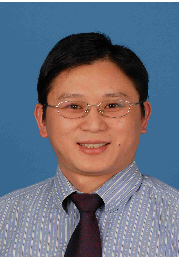
Minggang Xia
- Professor
- Supervisor of Doctorate Candidates
- Supervisor of Master's Candidates
- Name (English):Minggang Xia
- E-Mail:
- Date of Employment:2002-04-09
- Education Level:With Certificate of Graduation for Doctorate Study
- Business Address:仲英楼B812
- Degree:Doctor
- Professional Title:Professor
- Status:Employed
- Alma Mater:西安交通大学
- College:School of Physics
- Discipline:Physics
- Papers
Autonomously Tuning Multilayer Thermal Cloak with Variable Thermal Conductivity Based on Thermal Triggered Dual Phase-Transition Metamaterial
Release Time:2025-04-30 Hits:
- Date:2025-04-30
- Title of Paper:Autonomously Tuning Multilayer Thermal Cloak with Variable Thermal Conductivity Based on Thermal Triggered Dual Phase-Transition Metamaterial
- Journal:Chin. Phys. Lett.
- Summary:Thermal cloaks offer the potential to conceal internal objects from detection or to prevent thermal shock
by controlling external heat flow. However, most conventional natural materials lack the desired flexibility and
versatility required for on-demand thermal manipulation. We propose a solution in the form of homogeneous
multilayer thermodynamic cloaks. Through an ingenious design, these cloaks achieve exceptional and extreme
parameters, enabling the distribution of multiple materials in space. We first investigate the effects of important
design parameters on the thermal shielding effectiveness of conventional thermal cloaks. Subsequently, we
introduce an autonomous tuning function for the thermodynamic cloak, accomplished by leveraging two phase
transition materials as thermal conductive layers. Remarkably, this tuning function does not require any energy
input. Finite element analysis results demonstrate a significant reduction in the temperature gradient inside
the thermal cloak compared to the surrounding background. This reduction indicates the cloak’s remarkable
ability to manipulate the spatial thermal field. Furthermore, the utilization of materials undergoing phase transition
leads to an increase in thermal conductivity, enabling the cloak to achieve the opposite variation of the
temperature field between the object region and the background. This means that, while the temperature gradient
within the cloak decreases, the temperature gradient in the background increases. This work addresses a
compelling and crucial challenge in the realm of thermal metamaterials, i.e., autonomous tuning of the thermal
field without energy input. Such an achievement is currently unattainable with existing natural materials. This
study establishes the groundwork for the application of thermal metamaterials in thermodynamic cloaks, with
potential extensions into thermal energy harvesting, thermal camouflage, and thermoelectric conversion devices.
By harnessing phonons, our findings provide an unprecedented and practical approach to flexibly implementing
thermal cloaks and manipulating heat flow. - Co-author:Q. Lou and M. G. Xia*
- Volume:40
- Page Number:094401
- Translation or Not:No
- Date of Publication:2023-09-10