

陈鑫
 我的新闻
我的新闻发布时间:2021-03-18
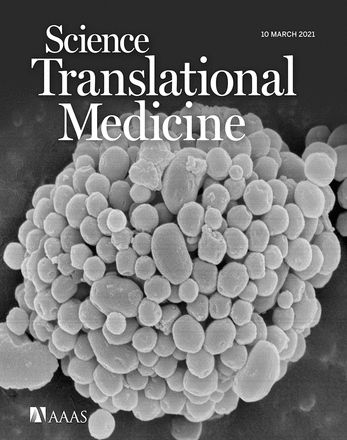
文章标题:实验室喜提Science Translational Medicine封面
内容:
Modular immune-homeostatic microparticles promote immune tolerance in mouse autoimmune models
Abstract: The therapeutic goal for autoimmune diseases is disease antigen-specific immune tolerance without nonspecific immune suppression. However, it is a challenge to induce antigen-specific immune tolerance in a dysregulated immune system. In this study, we developed immune-homeostatic microparticles (IHMs) that treat multiple mouse models of autoimmunity via induction of apoptosis in activated T cells and reestablishment of regulatory T cells. Specifically, in an experimental model of colitis, IHMs rapidly released monocyte chemotactic protein–1 after intravenous administration, which recruited activated T cells and then induced their apoptosis by conjugated Fas ligand on the IHM surface. This triggered professional macrophages to ingest apoptotic T cells and produce high quantities of transforming growth factor–β, which drove regulatory T cell differentiation. Furthermore, the modular design of IHMs allowed IHMs to be engineered with the autoantigen peptides that can reduce disease in an experimental autoimmune encephalomyelitis mouse model and a nonobese diabetic mouse model. This was accomplished by sustained release of the autoantigens after induction of T cell apoptosis and transforming growth factor–β production by macrophages, which promoted to establish an immune tolerant environment. Thus, IHMs may be an efficient therapeutic strategy for autoimmune diseases through induction of apoptosis and reestablishment of tolerant immune responses.