

陈鑫
 我的新闻
我的新闻发布时间:2020-10-27
文章标题:恭喜田然在Journal of Materials Science & Technology发表文章
内容:
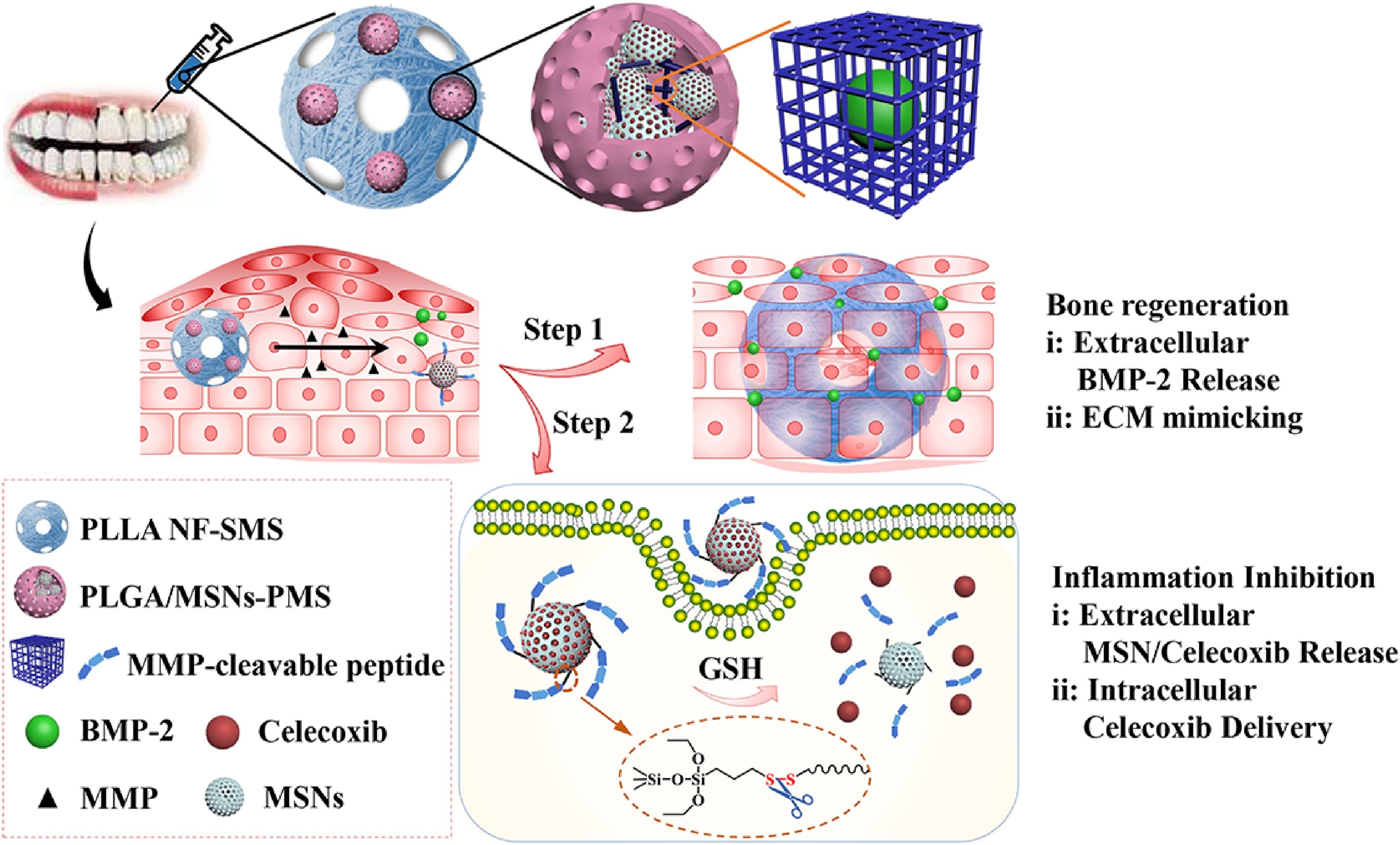
Stimuli responsive co-delivery of celecoxib and BMP2 from micro-scaffold for periodontal disease treatment
Abstract: Controlling inflammation meanwhile facilitating tissue regeneration has been considered as a promising strategy to treat inflammatory bone defect. Herein, we describe the synthesis of a bio-sensitive poly(lactic-co-glycolic acid)/mesoporous silica nanocarriers core-shell porous microsphere (PLGA/MSNs-PMS) encapsulated poly(L-lactic acid) (PLLA) spongy nanofibrous micro-scaffold as a new generation of therapeutic platform for effective reconstruction of bone defects caused by periodontal diseases. The PLGA/MSNs-PMS were designed as stimuli-responsive carriers for on-demand co-delivery of multiple biomolecules to provide proper physiological environment, while the multi-level (from macro-, micro- to nanometers) nanofibrous and porous structures in PLLA micro-scaffold were in charge of the reconstruction of ECM, which synergistically contribute to the enhancement of new tissue formation under inflammatory condition. After local injection into periodontal tissue, this construct could sequentially release bone growth factor (BMP-2) as well as anti-inflammatory drug (celecoxib) loaded MSNs in response to the over-expressed matrix metalloproteinases (MMP) in periodontal region. During alveolar bone regeneration induced by BMP-2 and ECM like structure, the MSNs would further deliver celecoxib in target cells to achieve inflammation inhibition, resulting in effective treatment of periodontal disease.